Complete AI Prompt Pack
1000+ prompts • $37
Managing a supply chain can feel like trying to juggle flaming torches while riding a unicycle—challenging and sometimes overwhelming. We all know that even the smallest hiccup can cause a ripple effect of delays and inefficiencies, leaving businesses scrambling for solutions.
But what if I told you there’s a way to streamline those processes and enhance your decision-making? Stick around, and I’ll show you how ChatGPT analytics can provide the insights you need to optimize your supply chain like a pro.
From practical benefits and key features to real-world examples and implementation tips, we’ll dive into how ChatGPT can transform your supply chain management and help you overcome common hurdles. Let’s get started!
Key Takeaways
- ChatGPT enhances supply chain management through AI-driven data analysis, improving operational efficiency.
- Real-time analytics helps identify bottlenecks and allows companies to respond quickly to issues.
- Automating repetitive tasks can reduce costs and improve forecasting accuracy for better inventory management.
- Key features include natural language processing, data visualization, and automated reporting.
- Successful real-world applications showcase significant cost savings and improved delivery times.
- Implementing ChatGPT requires data organization, pilot programs, and ongoing training for staff.
- Address potential challenges like data privacy and team resistance through clear communication and support.

How ChatGPT Can Improve Supply Chain Management Analytics
ChatGPT can significantly enhance supply chain management analytics by providing AI-driven insights based on vast datasets.
With its capabilities in data analysis, ChatGPT helps in recognizing trends and patterns that might go unnoticed with traditional methods.
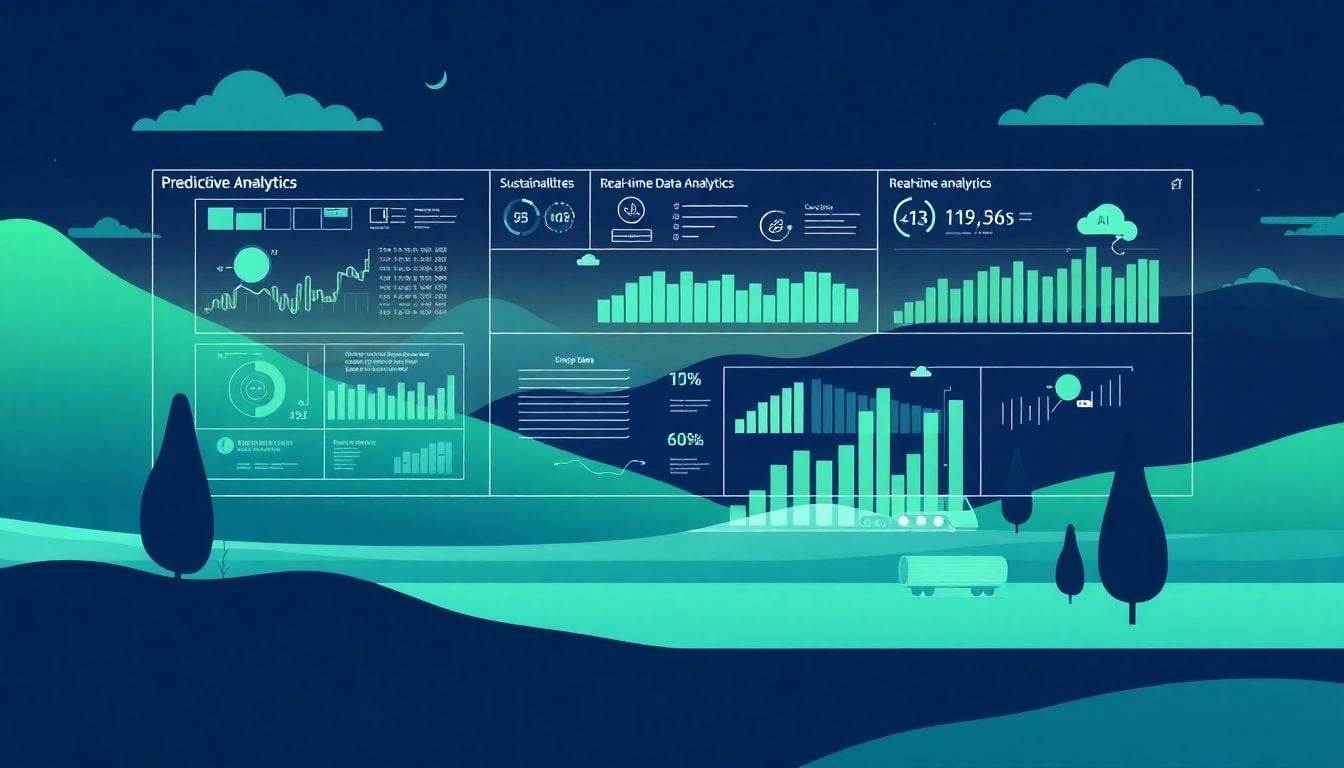
Real-time analytics ensures that decision-makers have the most current data at their fingertips, enhancing operational efficiency.
For instance, a logistics manager can simply prompt ChatGPT with:
“Analyze recent shipping data and identify potential bottlenecks in our supply chain.”
This enables quicker responses to issues before they escalate.
Moreover, predictive analytics can forecast demand, making it easier to allocate resources effectively.
Using ChatGPT, companies can enhance their decision-making processes, leading to more informed strategic choices.
Benefits of Using ChatGPT for Supply Chain Optimization
Integrating ChatGPT into supply chain processes brings numerous advantages.
Firstly, it aids in cost reduction by automating repetitive tasks and streamlining operations.
Enhancing forecasting accuracy is another noteworthy benefit, as AI can help predict future demand more effectively than traditional methods.
For businesses, improved inventory management means fewer stockouts and overstock situations, keeping costs in check.
You can ask ChatGPT to:
“Generate a report on our current inventory turnover ratios and suggest improvements.”
This is a quick way to leverage AI for tangible results.
Another advantage is the agility that ChatGPT brings to supply chain operations.
With rapid access to insights, companies can pivot quickly in response to market fluctuations.
Key Features of ChatGPT in Supply Chain Analytics
ChatGPT boasts several key functionalities specifically beneficial for supply chain analytics.
Its natural language processing (NLP) allows users to interact seamlessly with data, making complex queries easy.
Data visualization tools enable users to present analytics in a digestible format, facilitating better understanding across teams.
Automated reporting is another feature that saves time and reduces the risk of human errors.
Companies can integrate ChatGPT with existing systems, leveraging current data without a complete overhaul of their infrastructure.
Users should consider:
“List the most impactful KPIs for our supply chain and how to visualize them in a dashboard.”
Additionally, the scalability of ChatGPT solutions means they can grow alongside your business, adapting to increasing data loads.
Customizable analytics dashboards offer personalized views tailored to specific roles or departments, ensuring relevant insights for decision-makers.
Real-World Examples of ChatGPT in Supply Chain Management
Several companies have successfully deployed ChatGPT in their supply chain management processes with measurable outcomes.
For example, a major retailer utilized ChatGPT to optimize inventory management, resulting in a 20% reduction in holding costs.
The technology provided insights into purchasing trends, helping the company adjust orders more accurately based on demand forecasts.
Another case involves a logistics firm that applied ChatGPT to streamline delivery routes.
They prompted:
“Suggest optimized routes for our delivery fleet based on current traffic conditions.”
This led to significant cost savings and improved delivery times.
Industry-specific applications of ChatGPT also exist, such as in healthcare supply chains where it assists in tracking medical supplies efficiently.
These examples illustrate that the transformative power of ChatGPT is not just theoretical; it’s having real-world impacts across various sectors.
If you’re interested in exploring how AI prompts can be applied beyond supply chain management, check out these mental health prompts or creative writing prompts for inspiration.

Steps to Implement ChatGPT in Your Supply Chain Processes
Implementing ChatGPT in your supply chain processes involves several straightforward steps.
Start by identifying your specific needs within the supply chain.
Pinpoint the areas where ChatGPT can add value, such as demand forecasting or inventory management.
Next, ensure you have clean and organized data.
Data quality is key, as ChatGPT relies on accurate information to provide useful insights.
Begin with a pilot program by integrating ChatGPT into a small segment of your operations.
This will help you test its effectiveness before scaling up.
Incorporate training sessions for your team so they can utilize ChatGPT effectively.
Encourage them to experiment with commands, like:
“Create a predictive analysis report based on last year’s sales data.”
Once you see positive results, gradually roll out ChatGPT to other areas.
Don’t forget to measure the impact of your implementation by tracking performance metrics.
This ongoing assessment will ensure you’re getting the most out of ChatGPT in your supply chain.
Common Challenges When Using ChatGPT for Supply Chain Analytics
While ChatGPT offers many benefits, it’s essential to address potential challenges when integrating it into your supply chain.
One common issue is the resistance to change among team members.
Some may be skeptical about AI, so it’s crucial to communicate the benefits clearly.
Training programs should include practical examples to ease this transition.
Data privacy is another concern.
Ensure you’re compliant with regulations regarding data handling, especially if sensitive information is involved.
Technical difficulties during implementation can also arise, from system outages to integration issues.
Be prepared with IT support to resolve these problems quickly.
Ensuring data quality is vital as well.
ChatGPT thrives on accurate data, and any discrepancies might lead to flawed analysis.
Lastly, consider the need for continuous monitoring of AI outputs to maintain accuracy and reliability.
Encourage your team to use prompts like:
“Evaluate the quality of the last three months’ shipping data for accuracy.”
Being proactive about these challenges can help make the journey smoother.

Future Trends in Supply Chain Management with ChatGPT
Looking ahead, the integration of ChatGPT in supply chain management is poised to influence several key trends.
One major trend is the increasing reliance on predictive analytics to enhance decision-making.
As businesses gather more data, ChatGPT will play a critical role in forecasting supply chain needs effectively.
Another trend is the focus on sustainability.
Companies will utilize ChatGPT to assess environmental impacts and optimize resources accordingly.
This can include prompts like:
“Analyze our supply chain for sustainability opportunities and suggest eco-friendly practices.”
Furthermore, real-time data analytics will become more prevalent, enabling organizations to respond to market changes swiftly.
With AI becoming more sophisticated, we can expect improved automation in processes like procurement and inventory management.
Lastly, the personalization of supply chain solutions using ChatGPT will allow businesses to cater to individual client needs more effectively.
This shift will likely lead to increased customer satisfaction and loyalty.
Conclusion: Maximizing Efficiency in Supply Chain Management with ChatGPT
In conclusion, incorporating ChatGPT into your supply chain processes can result in significant efficiency gains.
The synergy between artificial intelligence and supply chain management leads to improved decision-making and operational agility.
By optimizing analytics and providing real-time insights, ChatGPT empowers teams to navigate challenges more effectively.
To maximize these benefits, businesses need to embrace training, address common challenges, and stay updated on emerging trends.
For those ready to enhance their supply chain operations, implementing ChatGPT is a strategic advantage worth considering.
Don’t hesitate to start experimenting with prompts like:
“Summarize our supply chain’s performance metrics over the last quarter.”
By actively engaging with AI, companies can position themselves for long-term success in a rapidly changing landscape.
FAQs
ChatGPT enhances supply chain analytics by providing predictive insights, analyzing vast datasets quickly, and enabling real-time decision-making, thereby optimizing operations and improving overall efficiency.
The key benefits include improved forecasting accuracy, enhanced communication among stakeholders, streamlined operations, and the ability to adapt quickly to market changes through advanced data analysis.
Common challenges include data quality issues, integration with existing systems, resistance to change from personnel, and ensuring user training for effective utilization of ChatGPT capabilities.
Future trends include greater automation of supply chain processes, enhanced predictive analytics capabilities, increased collaboration through AI-driven platforms, and improved sustainability practices guided by data insights from ChatGPT.
Related Articles

Loyalty Program Tiers: AI Ideas For Enhanced Customer Engagement
I know managing loyalty programs can feel overwhelming, especially when trying to keep customers happy and engaged. The good news is, AI ideas for tier systems can make this process much easier and more fun. If you keep reading, I’ll show you how AI can help design, personalize, and automate loyalty tiers, making your program … Read more

Referral Program Copy AI: Boosting Your Business With AI Solutions
Ever wonder how to get more people to join your referral programs without sounding pushy or salesy? You’re not alone. Many businesses struggle to craft the perfect message that encourages sharing yet feels genuine. Keep reading, and you’ll discover how AI can help you create compelling referral copy effortlessly. In just a few minutes, you’ll … Read more

Growth Loop Ideas With AI: Strategies for Business Success
Hey, I get it—growing a business online can feel like a never-ending challenge, especially when figuring out how to keep users coming back. But here’s the good news: AI has some clever tricks up its sleeve that can create what’s called “growth loops”—little engines that fuel your growth automatically. Stick around, and I’ll show you … Read more

Experiment Log AI Template: Benefits, Features, and Guide
Ever tried keeping track of your experiments but felt overwhelmed by messy notes and incomplete data? I get it—staying organized can be a hassle, especially when juggling multiple projects. But don’t worry—there’s a simple way to make logging experiments easier and more accurate. Keep reading, and I’ll show you how using an AI-powered experiment log … Read more

A/B Test Hypothesis AI Templates: Enhance Your Testing Process
If you’re running A/B tests, you know coming up with good hypotheses can be tricky. Sometimes it feels like guessing, and that can slow things down. But what if there was a way to make your hypotheses smarter and easier to create? Keep reading, and I’ll show you how AI templates can help you craft … Read more

Innovation Backlog AI Template: Boosting Your Innovation Process
Ever felt overwhelmed trying to keep track of all your innovation ideas? It’s easy to get lost in the chaos of managing backlog items, especially when everyone’s busy. Keep reading, and I’ll show you how an AI-powered template can make sorting and organizing those ideas a lot simpler. In just a few steps, you’ll be … Read more

Ideation Sprint Agenda AI: Plan, Execute, and Succeed Efficiently
I know many of us find brainstorming sessions a bit chaotic or just not as productive as we’d like. The good news is, using AI in your ideation sprint can help smooth out those rough edges and spark fresh ideas. Stick with me, and I’ll show you how AI tools can make your next session … Read more

Brainstorming Facilitation AI Prompts: Enhance Your Creativity
If you’ve ever felt stuck trying to run creative brainstorming sessions, you’re not alone. It can sometimes be tough to keep ideas flowing or find fresh angles on a problem. But don’t worry—there’s a way to make your sessions more effective and fun. Keep reading, and I’ll show you how AI prompts can be your … Read more

Design Thinking Workshop With AI: Tips, Tools, And Best Practices
Hey there! If the idea of running a design thinking workshop with AI sounds a bit overwhelming, you’re not alone. It’s common to wonder how AI can fit into such a creative process and whether it’ll help or just complicate things. Stick with me, though, and I’ll show you how AI tools—like ChatGPT—can boost your … Read more
Service Blueprint AI Template: Enhance Business Efficiency Today
Getting your service processes straight can feel like a puzzle, especially when trying to keep everyone on the same page. That’s where a Service Blueprint AI Template comes in handy—think of it as a clear map for your customer experience. Keep reading and you might find an easy way to plan, improve, and customize your … Read more

Customer Journey Map AI Template: Enhance Insights and Experience
Ever felt frustrated trying to map out your customers’ journey without the right tools? You’re not alone. Luckily, there’s now an AI-powered customer journey map template that promises to make this process easier and smarter. Keep reading, and I’ll show you how these templates work, their benefits, and how you can start using them to … Read more

Value Chain Analysis AI Guide: Improve Efficiency and Insights
Ever wonder if there’s a smarter way to analyze your company’s value chain without drowning in boring spreadsheets? You’re not alone—many feel stuck with slow, manual methods that just don’t cut it anymore. Stick with me, and I’ll show you how AI can make this process easier, faster, and way more insightful. Keep reading, and … Read more
Last updated: March 16, 2025