Complete AI Prompt Pack
1000+ prompts • $37
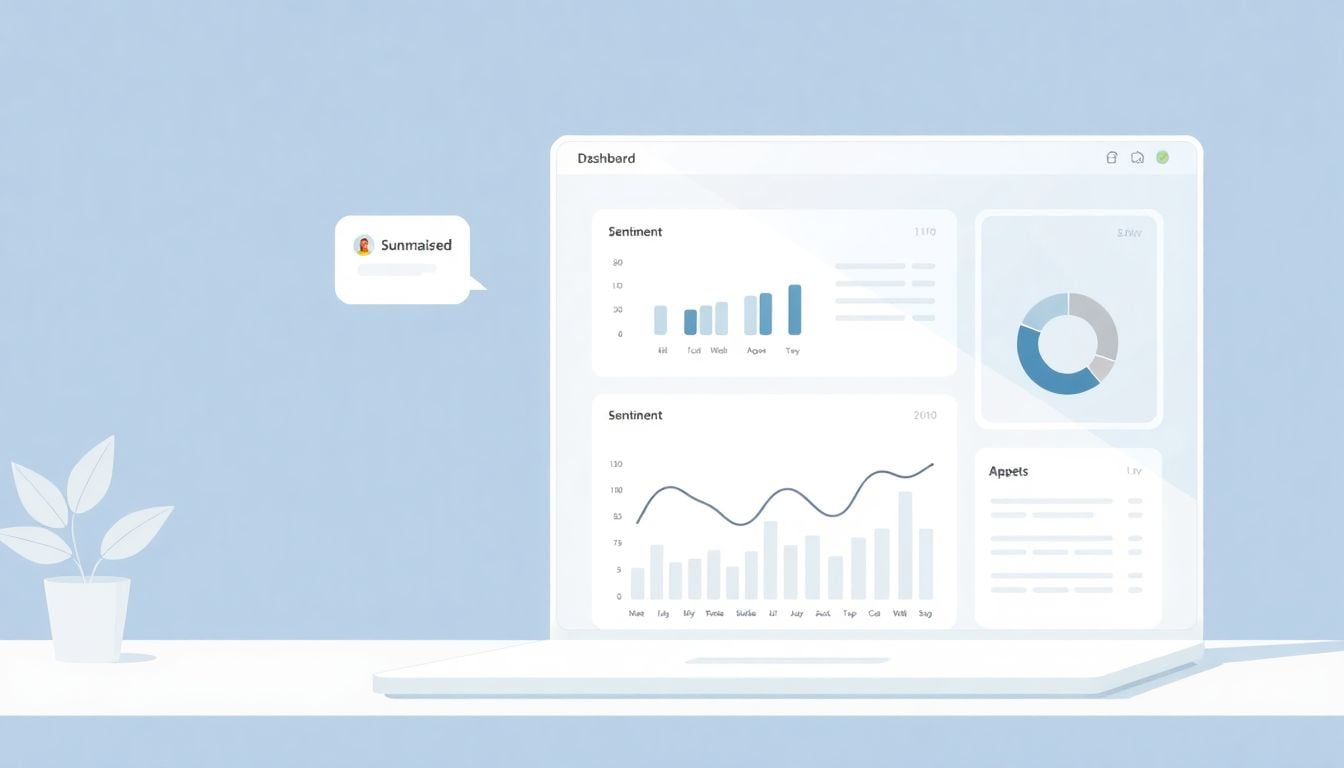
We all know how tricky it can be to keep tabs on what people really think about your brand. Sometimes, you miss the signs, and that can lead to surprises—good or bad. But don’t worry—there’s a way to stay ahead and get clear insights without pulling your hair out. Keep reading to see how ChatGPT’s social listening tools can make monitoring brand sentiment easy and even fun.
Key Takeaways
- Brand sentiment shows how customers feel about your business—monitoring it helps maintain your reputation.
- ChatGPT’s social listening tools can quickly analyze customer comments to provide insights on sentiment and trends.
- Effective prompts can streamline sentiment analysis, helping you categorize feedback and identify key themes.
- Key features like entity recognition and nuanced understanding improve sentiment accuracy, even detecting sarcasm.
- Regular monitoring can reveal issues early, allowing for proactive brand management and enhanced customer loyalty.

Understanding Brand Sentiment and Why It Matters
Think of brand sentiment as the overall vibe or mood people have about your business online. It’s about how customers feel—positive, negative, or neutral—when they talk about your brand. Understanding this helps you get a clear picture of your reputation without guesswork.
Why does this matter? Because opinions shared on social media, reviews, and comments shape how others see your brand. If most conversations are positive, it boosts trust and attracts new customers. But if there’s a lot of negativity, it signals you need to respond fast to prevent damage.
Sentiment analysis gives you a score or classification—like “happy,” “angry,” or “indifferent”—which paints a quick picture of how your brand is perceived. You want to track these feelings over time to see if your reputation is improving or declining.
Monitoring customer sentiment also uncovers what people really care about—be it your product quality, customer service, or brand values. Recognizing these emotions allows you to tailor your messaging and fix issues before they spiral out of control.
By paying attention to the tone and opinions shared online, you stay ahead of the curve, maintaining your brand image and making smarter marketing moves. After all, understanding how people feel about your brand is key to building trust and loyalty in today’s digital world.
Basics of Social Listening with ChatGPT
Social listening is all about keeping an ear to the ground on what’s being said about your brand across the web and social platforms. And ChatGPT can help you do this more effectively by understanding the conversations and extracting meaningful insights.
At its core, social listening with ChatGPT involves feeding it streams of social data—comments, reviews, posts—and asking it to identify key topics, emotions, or trends. This AI-driven approach makes it easier to process huge volumes of data quickly.
To start, you can use ChatGPT to analyze specific keywords or hashtags related to your brand. For example, paste in recent tweets or reviews about your company and ask, “What are people saying about [brand]?”
A simple way to do this is by asking ChatGPT questions like, “Summarize the sentiment of these comments,” or “Identify recurring themes in customer feedback.” These prompts help uncover what customers are feeling and discussing.
Another key aspect is trend detection. ChatGPT can spot spikes in positive or negative comments, helping you catch issues early or amplify what’s working. It’s like having a constant, smart neighborhood watch for your online reputation.
Overall, basic social listening with ChatGPT involves collecting raw data, then guiding it with prompts that streamline what you want to learn—whether that’s sentiment, common complaints, or praise—saving you time and giving clearer guidance for action.
Key Features of ChatGPT for Monitoring Brand Sentiment
When it comes to tracking what people think about your brand, ChatGPT offers a few handy features that make analysis easier and more accurate. First, it has strong language understanding capabilities, meaning it can grasp the subtleties of human conversations, including sarcasm or mixed emotions.
It can classify sentiment as positive, negative, or neutral with a good degree of confidence. You can ask ChatGPT, “Analyze the sentiment of this list of comments,” and it will provide an overall mood, helping you gauge public perception fast.
Another feature is entity recognition, where ChatGPT identifies mentions of your brand, competitors, or key products in conversations. This way, you know exactly what topics or keywords are driving most opinions.
ChatGPT also excels at step-by-step synthesis—combining multiple comments or reviews into a digestible summary. For instance, you can prompt it to generate a brief report on customer feelings about a recent product launch.
Furthermore, its context understanding allows it to detect subtle emotions and opinions that simple keyword matching might miss. For example, it can pick up on irony or nuance, giving you a more truthful picture of your brand’s health.
That said, its ability to predict potential shifts in sentiment over time can guide proactive reputation management, turning data into real insights for your marketing or customer service teams.
—
**Links to other content:**
Looking for ways to get more out of ChatGPT prompts? Check out our Prompts for Creative Writing to see how you can craft engaging content ideas. Also, for tips on improving online communication, visit our Prompts for Mental Health to help you craft empathetic responses.

Crafting Effective ChatGPT Prompts for Social Listening Analysis
Getting the most out of ChatGPT for brand sentiment analysis starts with knowing how to frame your prompts. Here are some ready-to-use prompts you can copy and paste to get detailed insights quickly.
Analyze a list of comments and classify their overall sentiment:
Analyze the following comments and categorize each as positive, negative, or neutral: [Insert comments here]
Summarize the general tone of this social media discussion:
Summarize the overall sentiment and main emotions expressed in these comments: [Insert comments here]
Identify recurring themes in customer feedback:
What are the common topics or issues mentioned in these reviews: [Insert reviews or comments here]
Detect tone and emotional cues in this conversation:
Evaluate the emotional tone and sentiment in this message: [Insert message here]
Generate a quick report on recent mentions about my brand:
Create a brief summary highlighting positive, negative, and neutral mentions of the brand in this data set: [Insert data]
Find potential causes of negative sentiment spikes:
Identify possible reasons for a sudden increase in negative feedback about [brand/product], based on these comments: [Insert comments]
Compare sentiment over two time periods:
Analyze and compare the sentiment of comments from [Date Range 1] and [Date Range 2] related to [brand/product]: [Insert comments]
Highlight key customer concerns for product improvement:
Based on these reviews, what are the main issues customers are mentioning about [product/service]?: [Insert reviews]
Detect sarcasm or irony in a set of comments:
Identify any sarcastic or ironic statements in these comments: [Insert comments]
Provide actionable insights from social listening data:
Summarize the main positive and negative feedback received last month, and suggest possible actions based on these insights: [Insert data]
Using these prompts directly in ChatGPT helps you quickly turn raw social data into meaningful insights without complicated setups. Adjust the placeholders to fit your data, and you’ll be set for smarter brand sentiment tracking.

Using ChatGPT for Competitive Analysis and Benchmarking
Understanding how your brand stacks up against competitors is a key part of managing your reputation online. ChatGPT can help you analyze competitors’ mentions, strengths, and weaknesses by summing up public sentiment around their products or services.
Start by gathering social mentions about your key competitors across platforms like Twitter, Facebook, and review sites.
Use prompts like, “Summarize the overall sentiment of the following comments about competitor X,” to get a quick snapshot of their perception.
Prompt ChatGPT to compare your brand’s sentiment with competitors by asking, “Compare the positive and negative aspects of mentions about my brand versus competitor X.”
Analyze these insights to identify gaps or opportunities in your strategy, and adjust your messaging accordingly.
For example, you can ask: “Identify the main strengths and weaknesses highlighted in customer feedback for competitor Y.” This helps you spot areas where your brand can better meet customer expectations.
Using ChatGPT this way allows you to stay informed about industry benchmarks and keep your brand competitive.
Monitoring Customer Feedback and Reviews Effectively with ChatGPT
Customer reviews are goldmines of insights, but sorting through hundreds or thousands of them can be overwhelming. ChatGPT simplifies this process by analyzing reviews at scale.
Feed it a batch of reviews and prompt, “Analyze these reviews and identify common praise points and complaints.” It will distill the main themes for you.
Use prompts like, “Determine the overall satisfaction level based on these reviews,” to gauge general customer happiness.
Ask ChatGPT to detect specific issues by prompting, “Highlight any mentions of product defects or service problems in these reviews.”
This process helps you quickly identify recurring problems or strengths, guiding product improvements and customer service responses.
In addition, you can request, “Summarize the tone and emotions expressed in these reviews,” to better understand customer feelings and respond more empathetically.
These insights make it easier to react promptly and craft targeted messages that address concerns and reinforce positives.
Creating Actionable Reports and Summaries from Sentiment Data
Turning raw sentiment data into useful reports is a big part of reputation management. ChatGPT can generate clear, structured summaries to keep your team informed.
Ask ChatGPT with prompts such as, “Generate a summary report of last month’s social media sentiment regarding our brand,” to get a concise overview.
You can specify focus areas, for example: “Highlight the main positive feedback and recurring complaints in these comments.”
Break down reports further by asking, “List the top three issues mentioned in customer feedback,” to prioritize fixes.
Use prompts like, “Create a daily or weekly dashboard of brand sentiment trends,” for regular updates that help you stay on top of shifts.
This approach saves time and helps you make data-driven decisions based on plain-language summaries of complex information.
By systematically generating these reports, your team can focus on strategic responses rather than data crunching alone.
Developing a Crisis Response Strategy with ChatGPT
When negative sentiment spikes unexpectedly, having a plan in place helps you respond swiftly and effectively. ChatGPT can assist in crafting crisis communication materials.
Start by prompting, “Draft a professional apology and response to negative feedback about [specific issue].”
For example: “Create a response template to address accusations of product defect in social media comments.”
Use prompts like, “Generate empathetic responses for common customer complaints,” to prepare a range of replies ready to deploy.
Ask for, “Suggestions on how to communicate proactively following a reputation dip,” to guide your messaging approach.
Integrate these prompts into your crisis plan, updating them as needed based on the specific situation or feedback.
This readiness helps you respond faster, demonstrate accountability, and show customers that you care, even during turbulent times.
Training Your Team in ChatGPT for Social Listening
Training your staff to effectively use ChatGPT for social listening is crucial for ongoing success. Start by teaching them how to craft precise prompts that yield useful insights.
Give examples like, “Analyze sentiment of these comments and identify main concerns,” and walk through constructing similar prompts.
Encourage your team to experiment with prompt variations to discover what works best for different scenarios.
Develop a set of standard prompts for common tasks—like summarizing reviews or detecting sarcasm—that team members can quickly adopt.
Introduce best practices, such as breaking up large data sets into manageable chunks before analysis, to ensure accuracy.
Finally, foster a culture of continuous learning, encouraging team members to share effective prompt strategies to improve overall sentiment analysis capabilities.
This way, everyone becomes more confident in leveraging ChatGPT to keep your brand’s social voice positive and responsive.
FAQs
Brand sentiment refers to the emotional tone and attitude consumers express towards a brand. Understanding it is crucial for businesses, as it impacts customer loyalty, brand reputation, and overall marketing strategies.
ChatGPT improves social listening by processing large volumes of social media data swiftly, identifying trends, and interpreting sentiment, which enables brands to stay responsive to consumer opinions and feedback.
Common challenges include handling ambiguous language, detecting sarcasm, and processing multilingual data. Overcoming these requires effective prompting and utilizing advanced AI features for accurate sentiment detection.
Best practices include setting clear monitoring goals, using consistent prompts, analyzing data regularly, and adapting strategies based on insights gathered to ensure effective brand sentiment management.
Related Articles

Loyalty Program Tiers: AI Ideas For Enhanced Customer Engagement
I know managing loyalty programs can feel overwhelming, especially when trying to keep customers happy and engaged. The good news is, AI ideas for tier systems can make this process much easier and more fun. If you keep reading, I’ll show you how AI can help design, personalize, and automate loyalty tiers, making your program … Read more

Referral Program Copy AI: Boosting Your Business With AI Solutions
Ever wonder how to get more people to join your referral programs without sounding pushy or salesy? You’re not alone. Many businesses struggle to craft the perfect message that encourages sharing yet feels genuine. Keep reading, and you’ll discover how AI can help you create compelling referral copy effortlessly. In just a few minutes, you’ll … Read more

Growth Loop Ideas With AI: Strategies for Business Success
Hey, I get it—growing a business online can feel like a never-ending challenge, especially when figuring out how to keep users coming back. But here’s the good news: AI has some clever tricks up its sleeve that can create what’s called “growth loops”—little engines that fuel your growth automatically. Stick around, and I’ll show you … Read more

Experiment Log AI Template: Benefits, Features, and Guide
Ever tried keeping track of your experiments but felt overwhelmed by messy notes and incomplete data? I get it—staying organized can be a hassle, especially when juggling multiple projects. But don’t worry—there’s a simple way to make logging experiments easier and more accurate. Keep reading, and I’ll show you how using an AI-powered experiment log … Read more

A/B Test Hypothesis AI Templates: Enhance Your Testing Process
If you’re running A/B tests, you know coming up with good hypotheses can be tricky. Sometimes it feels like guessing, and that can slow things down. But what if there was a way to make your hypotheses smarter and easier to create? Keep reading, and I’ll show you how AI templates can help you craft … Read more

Innovation Backlog AI Template: Boosting Your Innovation Process
Ever felt overwhelmed trying to keep track of all your innovation ideas? It’s easy to get lost in the chaos of managing backlog items, especially when everyone’s busy. Keep reading, and I’ll show you how an AI-powered template can make sorting and organizing those ideas a lot simpler. In just a few steps, you’ll be … Read more

Ideation Sprint Agenda AI: Plan, Execute, and Succeed Efficiently
I know many of us find brainstorming sessions a bit chaotic or just not as productive as we’d like. The good news is, using AI in your ideation sprint can help smooth out those rough edges and spark fresh ideas. Stick with me, and I’ll show you how AI tools can make your next session … Read more

Brainstorming Facilitation AI Prompts: Enhance Your Creativity
If you’ve ever felt stuck trying to run creative brainstorming sessions, you’re not alone. It can sometimes be tough to keep ideas flowing or find fresh angles on a problem. But don’t worry—there’s a way to make your sessions more effective and fun. Keep reading, and I’ll show you how AI prompts can be your … Read more

Design Thinking Workshop With AI: Tips, Tools, And Best Practices
Hey there! If the idea of running a design thinking workshop with AI sounds a bit overwhelming, you’re not alone. It’s common to wonder how AI can fit into such a creative process and whether it’ll help or just complicate things. Stick with me, though, and I’ll show you how AI tools—like ChatGPT—can boost your … Read more
Service Blueprint AI Template: Enhance Business Efficiency Today
Getting your service processes straight can feel like a puzzle, especially when trying to keep everyone on the same page. That’s where a Service Blueprint AI Template comes in handy—think of it as a clear map for your customer experience. Keep reading and you might find an easy way to plan, improve, and customize your … Read more

Customer Journey Map AI Template: Enhance Insights and Experience
Ever felt frustrated trying to map out your customers’ journey without the right tools? You’re not alone. Luckily, there’s now an AI-powered customer journey map template that promises to make this process easier and smarter. Keep reading, and I’ll show you how these templates work, their benefits, and how you can start using them to … Read more

Value Chain Analysis AI Guide: Improve Efficiency and Insights
Ever wonder if there’s a smarter way to analyze your company’s value chain without drowning in boring spreadsheets? You’re not alone—many feel stuck with slow, manual methods that just don’t cut it anymore. Stick with me, and I’ll show you how AI can make this process easier, faster, and way more insightful. Keep reading, and … Read more
Last updated: August 3, 2025