Complete AI Prompt Pack
1000+ prompts • $37
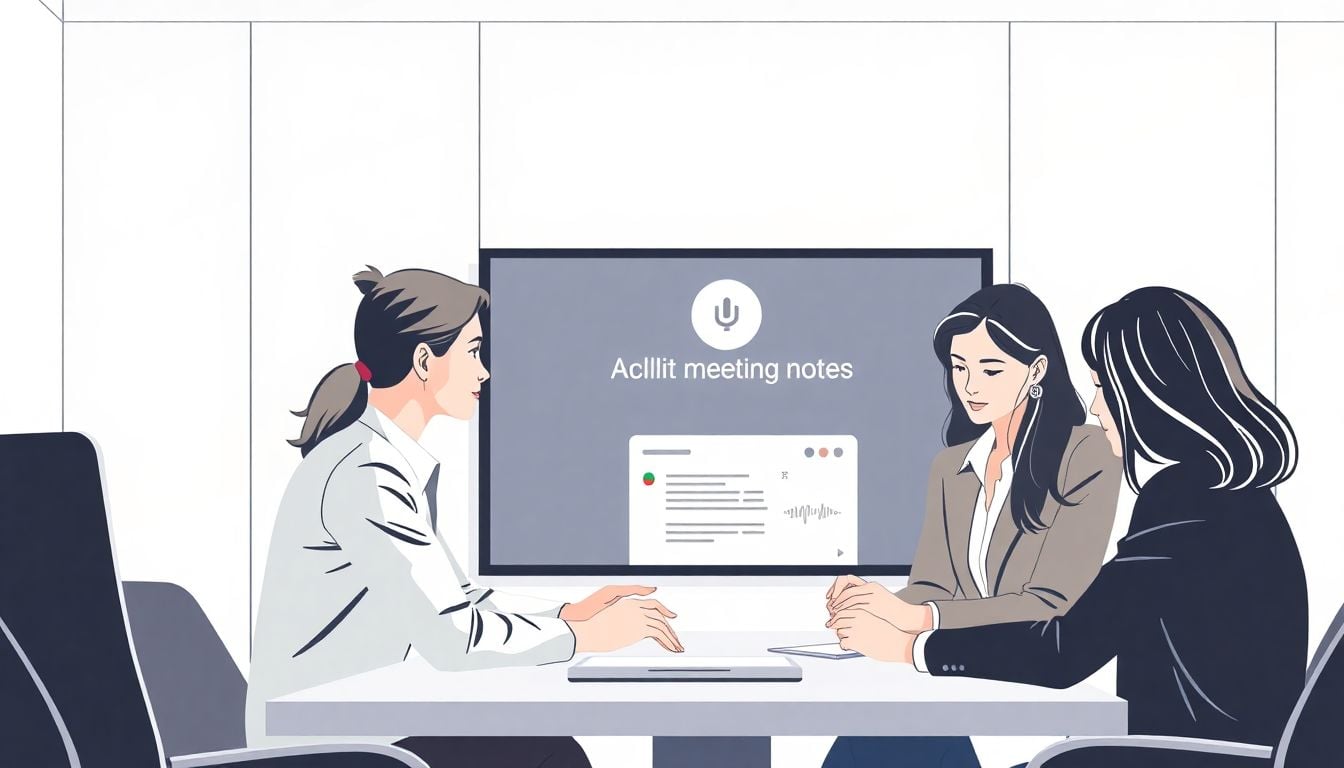
Ever tried to keep track of meeting notes and ended up with a pile of scribbles or hours spent typing everything out? I get it—staying organized can feel like a chore. Keep reading, though—there’s a way to make this simpler and even a bit fun. Meet the Meeting Minutes AI Generator, a smart tool that can turn your conversations into clear, accurate notes without breaking a sweat.
In the next few lines, I’ll show you how these tools work, their key features, and how they can save you time while keeping your meetings on point. Plus, I’ll share some tips to get the most out of them and introduce popular options you might want to try.
Key Takeaways
- A Meeting Minutes AI Generator automatically creates organized notes from meeting conversations, saving you time and effort.
- These tools utilize speech recognition and natural language processing to transcribe audio, identify key points, and summarize discussions.
- Effective prompting is crucial; specific requests yield better summaries and action items tailored to your needs.
- Always review AI-generated notes for accuracy, especially for important assignments and deadlines, to ensure clarity.
- Integrate AI tools with your existing platforms to streamline workflows and enhance meeting note accessibility.

What is a Meeting Minutes AI Generator?
A Meeting Minutes AI Generator is a tool powered by artificial intelligence that automatically creates summaries and notes from your meeting conversations. Instead of manually jotting down every point, you can rely on these tools to transcribe and condense discussions quickly.
These platforms often use natural language processing (NLP) techniques to understand and interpret spoken language during meetings. They transform audio or live speech into readable text, highlighting key points, decisions, and action items.
Think of it as having a virtual scribe that listens attentively and produces clear, organized notes without you lifting a finger—saving time and reducing the chances of forgetting important details.
Some popular terms that describe these tools include “automated meeting minutes,” “AI for meeting notes,” and “meeting transcript AI.” They are especially useful in remote or hybrid work environments where meetings happen over video calls or conference calls.
Using an AI to generate meeting minutes can help teams stay aligned, prepare summaries for those who missed the meeting, and keep a record of decisions made. They turn unstructured conversation into structured, easy-to-review documents.
If you’re curious how these tools work behind the scenes, read on! We’ll explore their processes and how they turn lengthy discussions into concise summaries.
How Does a Meeting Minutes AI Generator Work?
At its core, a Meeting Minutes AI Generator listens to or receives audio from your meetings, then processes it using speech recognition technology. This conversion from sound to text is called transcription, and it’s the first step in creating meeting notes.
Once the speech is transcribed into written form, NLP algorithms analyze the text to identify important information like speakers, key topics, decisions, and action items. Techniques like entity recognition help pick out names, dates, and project references.
Some AI tools also apply text summarization algorithms to condense lengthy discussions into bite-sized points. They look for repeated themes, priorities, and conclusions to produce a clear, digestible summary.
The entire process looks like this: audio input → speech-to-text transcription → content analysis and extraction → summary generation. Especially with machine learning, these systems improve accuracy over time, getting better at understanding different accents, terminologies, and meeting contexts.
For example, you might give ChatGPT a prompt like: “Transcribe this meeting recording and highlight all action items and decisions.” The AI then processes the audio, converts it into text, identifies key points, and outputs a clean summary.
Another practical prompt could be: “Generate a brief meeting summary focusing on assigned tasks and deadlines from this transcript.” This helps to automate the most critical parts of meeting documentation.
Overall, a Meeting Minutes AI Generator combines speech recognition, NLP, and sometimes machine learning to turn spoken conversations into organized notes that everyone can refer back to easily.

Effective Prompting for ChatGPT to Generate Precise Meeting Summaries and Action Items
One of the best ways to get high-quality meeting notes from ChatGPT is by crafting specific prompts that guide it to focus on what matters most. To do this, start with clear instructions and specify the type of output you want.
For example, you can use prompts like: “Read this meeting transcript and list all decisions made, including who is responsible and deadlines.” This directs ChatGPT to extract actionable items and accountability points.
Another useful prompt is: “Summarize this meeting conversation into three key points, emphasizing decisions and next steps.” It forces the model to condense discussions into essential elements.
For generating structured notes, try: “Create a detailed action plan from this meeting transcript, itemizing tasks, assigned personnels, and due dates.” This helps in producing a clear, task-oriented document.
If you want focus on specific topics, use prompts like: “Identify and list all topics discussed, along with main conclusions, from this meeting transcript.” This is especially helpful when meetings cover multiple agendas.
For a quick overview, ask: “Provide a brief summary highlighting main decisions, action items, and any unresolved issues from the following meeting transcript.” It helps busy teams catch up fast.
Pro tip: always include the meeting transcript or notes in your prompts, and specify the format you want — bullet points, numbered lists, or paragraphs. This guarantees more accurate outputs tailored to your needs.
Sample prompt to copy and use:
“Analyze this meeting transcript and extract all action items, including responsible person and deadline, formatted as a numbered list.”
Another actionable prompt:
“Summarize this meeting discussion into three main points and list all decisions made at the end.”
Using these detailed prompts regularly ensures consistent, precise results that save you time and make sure no important detail slips through.
Best Practices for Reviewing and Editing AI-Generated Meeting Notes
Even the smartest AI isn’t perfect, so reviewing and adjusting AI-generated notes is key. Start by scanning for missing or misinterpreted information, especially names or deadlines.
Look out for transcribed audio errors—words that sound similar but have different meanings—like “site” versus “cite”—and correct them for clarity.
Ensure that action items are clearly assigned and include realistic deadlines. Sometimes, AI summaries might group tasks too broadly, so breaking them down helps team members see exactly what to do.
Check if the AI captured all the main points and decisions. If something significant was omitted, add it manually to complete the record.
For quick edits, use tools like: “Edit this meeting notes for clarity and add missing action items,” or “Correct any transcription errors in the attached notes.”
To standardize your notes even better, create a template and adapt the AI-generated content to fit it—like headers for Decisions, Action Items, or Next Steps. This keeps your documentation consistent across meetings.
Remember, AI notes are a starting point. Always add your personal touch—highlight critical points, clarify ambiguous parts, and ensure the tone aligns with your organization’s style.
Pro tip: develop a checklist for reviewing AI notes so you can quickly spot common issues and save time during edits.
Tools and Strategies to Integrate Meeting Minutes AI with Your Workflow
To get the most out of AI meeting notes, embed these tools into your regular workflow. Use integrations with your calendar and video conferencing platforms to automatically upload meeting recordings or transcripts.
For instance, connect your video calls with services like Zoom or Microsoft Teams to have recordings automatically transcribed and sent to your AI tool for processing.
Set up workflows using automation platforms like Zapier or IFTTT to streamline the transfer of meeting recordings directly into your AI tools, reducing manual upload steps.
Some AI tools offer plugins or APIs to embed directly into your project management or note-taking apps, such as Notion, Evernote, or Asana, making meeting notes accessible right where your team works.
Adopt consistent naming conventions and filing structures for your meeting notes to make retrieval easier and ensure team members know where to find the latest summaries.
Train your team on how to prepare meeting recordings—clear audio, minimal background noise, and speaking slowly—so the AI can produce more accurate notes.
Scheduling regular sessions to review and refine your AI integration processes will keep efficiency high and help catch any issues early.
Finally, encourage team members to provide feedback on AI-generated notes to fine-tune prompts and improve overall quality over time.

How to Train Your Team to Use AI Meeting Minutes Tools Effectively
Getting your team up to speed on AI meeting minute tools isn’t just about showing them the software—it’s about teaching best practices to get accurate, useful notes.
Start by explaining the importance of clear audio recordings—encourage everyone to speak clearly and avoid background noise to improve transcription accuracy.
Provide training sessions or quick tutorials on how to initiate recordings, upload files, and use prompts effectively with chatbots like ChatGPT.
Share sample prompts that team members can copy-paste directly to generate summaries or action items, such as: “Analyze this transcript and list all action items with responsible persons and deadlines.”
Remind them to review and edit AI-generated notes — a quick glance to catch inaccuracies can save a lot of confusion later.
Encourage team members to annotate transcripts with labels or comments to help the AI understand context better in future sessions.
Set standard procedures for naming filed notes and organizing recordings to make retrieval straightforward and consistent.
Advise regular feedback sessions to discuss what works well or needs adjustment, helping the team refine their AI note-taking approach.
Lastly, instill the habit of preparing agendas that highlight key discussion points, making it easier for AI tools to focus on relevant content.
Common Mistakes to Avoid When Using AI for Meeting Minutes
One big mistake is relying solely on AI without reviewing the notes—errors or missed details can slip through, leading to confusion.
Avoid poor audio quality—background noise, overlapping speakers, or mumbling make transcription less accurate and can cause misunderstandings.
Don’t forget to specify the language or terminology used in specialized fields—failing to do so may result in incorrect or unclear notes.
Another pitfall is ignoring the need for manual edits—AI is a helper, but not the final authority, especially for complex or nuanced discussions.
Steer clear of overloading prompts with vague instructions—be specific, such as: “List decisions made, responsible persons, and deadlines.”
Make sure your team knows not to assume AI has captured everything—double-check, especially information related to deadlines or responsibilities.
Avoid inconsistent naming conventions for files or notes, which can cause confusion when searching for past meeting summaries.
Don’t neglect privacy—be cautious when sharing sensitive meeting content with AI tools, and ensure compliance with data policies.
How to Handle Technical Issues with Meeting Minutes AI Tools
Encountering hiccups like poor transcription or missed notes can be frustrating, but there are straightforward steps to troubleshoot.
Start by checking the audio quality—use microphones or record in quiet environments to improve clarity.
If transcriptions are inaccurate, consider training the AI with domain-specific vocabulary or adding custom dictionaries if the tool supports it.
Ensure your internet connection is stable, as lag or interruptions can disrupt recording uploads and processing.
Update your AI software or app regularly to benefit from bug fixes and new features improving reliability.
When issues persist, contact support or check online help resources—most tools offer guides for common problems.
Test the AI with short recordings first to verify accuracy before scheduling longer meetings.
If you’re using multiple platforms, make sure integrations are correctly set up and configured for seamless operation.
How to Get the Most Out of AI Meeting Notes in Your Organization
The secret to maximizing AI-generated meeting notes is integrating them into your everyday processes, not just saving them as files.
Use AI summaries to inform project dashboards or reports, making data instantly accessible to decision-makers.
Encourage teams to revisit AI notes before meetings for quick refreshers—this keeps everyone aligned.
Automate sharing by connecting your AI tools with team collaboration platforms like Slack, Teams, or email to distribute summaries immediately after meetings.
Develop a standardized template for notes so AI outputs are consistent, making it easier to compare across meetings or projects.
Hold periodic reviews of how well the AI notes are working—adjust prompts or settings to improve relevance and accuracy.
Promote a culture of continuous improvement by inviting feedback on AI tools—what’s working, what isn’t, and what can be better.
Pair AI notes with manual follow-ups for complex projects to ensure nothing is overlooked, combining automation with human oversight.
FAQs
An AI minutes generator can be used for various types of meetings, including corporate meetings, team huddles, project updates, workshops, and even virtual gatherings, streamlining the note-taking process regardless of the meeting format.
Yes, most AI-generated meeting minutes can be edited. Users can customize and refine the content to ensure it accurately reflects the discussion and meets organizational standards.
Data security varies by provider, but many AI meeting tools implement encryption and comply with privacy regulations. Always review the tool’s security features before use to ensure your data is protected.
When selecting an AI minutes generator, consider features like transcription accuracy, ease of use, integration capabilities, customization options, and data security measures to ensure it meets your organization’s needs.
Related Articles

Loyalty Program Tiers: AI Ideas For Enhanced Customer Engagement
I know managing loyalty programs can feel overwhelming, especially when trying to keep customers happy and engaged. The good news is, AI ideas for tier systems can make this process much easier and more fun. If you keep reading, I’ll show you how AI can help design, personalize, and automate loyalty tiers, making your program … Read more

Referral Program Copy AI: Boosting Your Business With AI Solutions
Ever wonder how to get more people to join your referral programs without sounding pushy or salesy? You’re not alone. Many businesses struggle to craft the perfect message that encourages sharing yet feels genuine. Keep reading, and you’ll discover how AI can help you create compelling referral copy effortlessly. In just a few minutes, you’ll … Read more

Growth Loop Ideas With AI: Strategies for Business Success
Hey, I get it—growing a business online can feel like a never-ending challenge, especially when figuring out how to keep users coming back. But here’s the good news: AI has some clever tricks up its sleeve that can create what’s called “growth loops”—little engines that fuel your growth automatically. Stick around, and I’ll show you … Read more

Experiment Log AI Template: Benefits, Features, and Guide
Ever tried keeping track of your experiments but felt overwhelmed by messy notes and incomplete data? I get it—staying organized can be a hassle, especially when juggling multiple projects. But don’t worry—there’s a simple way to make logging experiments easier and more accurate. Keep reading, and I’ll show you how using an AI-powered experiment log … Read more

A/B Test Hypothesis AI Templates: Enhance Your Testing Process
If you’re running A/B tests, you know coming up with good hypotheses can be tricky. Sometimes it feels like guessing, and that can slow things down. But what if there was a way to make your hypotheses smarter and easier to create? Keep reading, and I’ll show you how AI templates can help you craft … Read more

Innovation Backlog AI Template: Boosting Your Innovation Process
Ever felt overwhelmed trying to keep track of all your innovation ideas? It’s easy to get lost in the chaos of managing backlog items, especially when everyone’s busy. Keep reading, and I’ll show you how an AI-powered template can make sorting and organizing those ideas a lot simpler. In just a few steps, you’ll be … Read more

Ideation Sprint Agenda AI: Plan, Execute, and Succeed Efficiently
I know many of us find brainstorming sessions a bit chaotic or just not as productive as we’d like. The good news is, using AI in your ideation sprint can help smooth out those rough edges and spark fresh ideas. Stick with me, and I’ll show you how AI tools can make your next session … Read more

Brainstorming Facilitation AI Prompts: Enhance Your Creativity
If you’ve ever felt stuck trying to run creative brainstorming sessions, you’re not alone. It can sometimes be tough to keep ideas flowing or find fresh angles on a problem. But don’t worry—there’s a way to make your sessions more effective and fun. Keep reading, and I’ll show you how AI prompts can be your … Read more

Design Thinking Workshop With AI: Tips, Tools, And Best Practices
Hey there! If the idea of running a design thinking workshop with AI sounds a bit overwhelming, you’re not alone. It’s common to wonder how AI can fit into such a creative process and whether it’ll help or just complicate things. Stick with me, though, and I’ll show you how AI tools—like ChatGPT—can boost your … Read more
Service Blueprint AI Template: Enhance Business Efficiency Today
Getting your service processes straight can feel like a puzzle, especially when trying to keep everyone on the same page. That’s where a Service Blueprint AI Template comes in handy—think of it as a clear map for your customer experience. Keep reading and you might find an easy way to plan, improve, and customize your … Read more

Customer Journey Map AI Template: Enhance Insights and Experience
Ever felt frustrated trying to map out your customers’ journey without the right tools? You’re not alone. Luckily, there’s now an AI-powered customer journey map template that promises to make this process easier and smarter. Keep reading, and I’ll show you how these templates work, their benefits, and how you can start using them to … Read more
Value Chain Analysis AI Guide: Improve Efficiency and Insights
Ever wonder if there’s a smarter way to analyze your company’s value chain without drowning in boring spreadsheets? You’re not alone—many feel stuck with slow, manual methods that just don’t cut it anymore. Stick with me, and I’ll show you how AI can make this process easier, faster, and way more insightful. Keep reading, and … Read more
Last updated: October 6, 2025