Complete AI Prompt Pack
1000+ prompts • $37
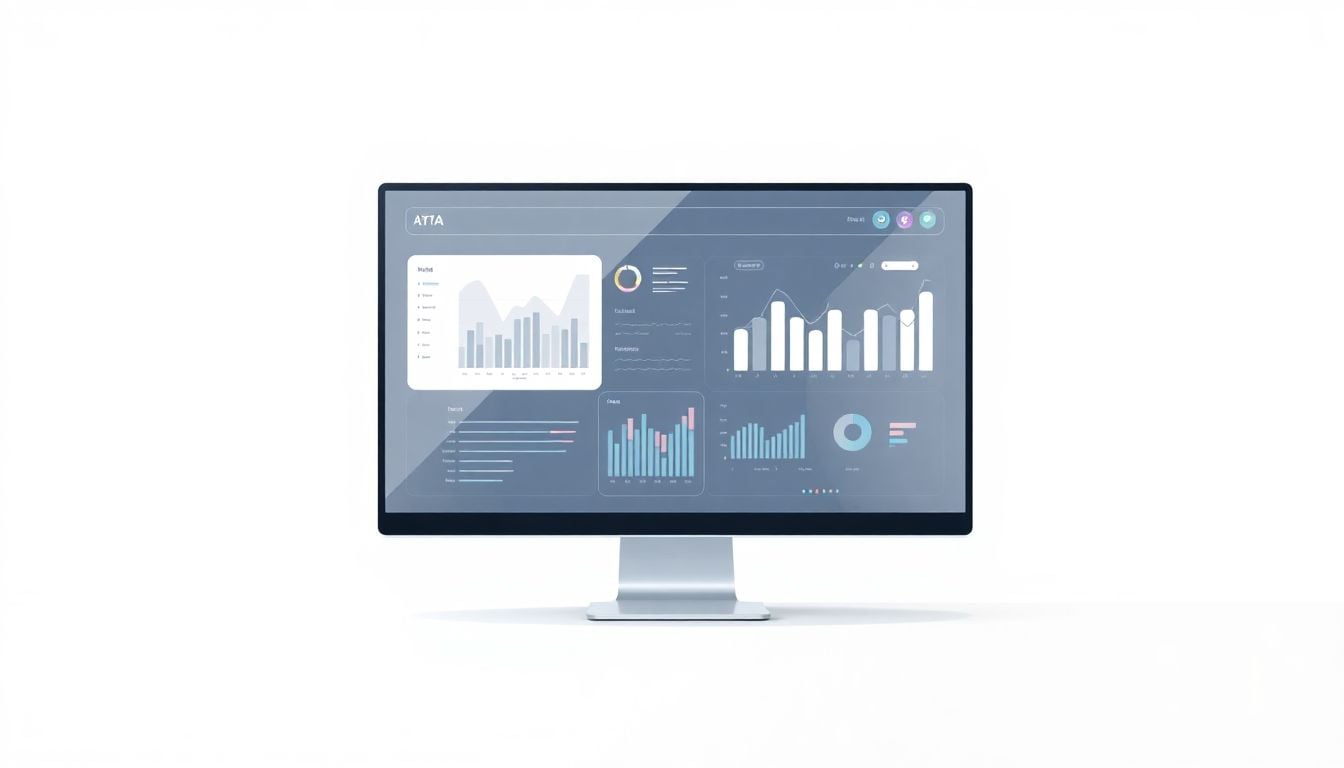
Looking for a way to get live data insights without the hassle? Many struggle with turning raw data into real-time answers, making decision-making slow and clunky. But if you’re curious how to set up instant data checks using ChatGPT, you’re in the right place. Keep reading, and I’ll show you simple steps to connect, analyze, and monitor your data live—making your life way easier!
Key Takeaways
- Real-time analytics with ChatGPT delivers instant data insights, making decision-making faster and more efficient.
- Use clear and specific prompts to get the best responses from ChatGPT for live data analysis.
- Set up automation to regularly feed data into ChatGPT for continuous monitoring and updated insights.
- Create alert workflows to notify you of important anomalies or trends detected by ChatGPT.
- Regularly test and refine your prompts to ensure they provide relevant and actionable insights.

What is Real-Time Analytics with ChatGPT?
Real-time analytics with ChatGPT is about using the AI to process and interpret data the moment it’s generated.
Instead of waiting hours or days for reports, ChatGPT helps you understand live data instantly through natural conversations.
Think of it as chatting with an expert who gives you up-to-the-minute insights based on your current data streams.
This setup combines the power of machine learning with the flexibility of natural language processing, making data analysis more accessible.
With real-time analytics, you can spot trends, identify anomalies, or get quick summaries without needing heavy tech skills.
Whether managing sales, customer feedback, or operational metrics, ChatGPT acts as your AI-powered analytics assistant.
The goal is to turn raw, streaming data into understandable, actionable insights during the moment they happen.
By making sense of data as it flows in, ChatGPT enables faster decision-making and a more responsive business approach.
It’s like having a live data analyst in your pocket, ready to give you updates at a moment’s notice.

Crafting Effective Prompts for Real-Time Data Analysis
Creating the right prompts is key to getting valuable insights from ChatGPT in a live data environment. Start by framing clear, specific questions that guide the AI to produce focused responses. For example, asking “Summarize the latest customer feedback from this streaming dataset” helps ChatGPT zero in on recent data.
Use prompts that instruct ChatGPT to analyze data patterns, like “Identify top trending products based on the latest sales data” or “Detect anomalies in the recent traffic logs.” The more detail you include, the better the quality of the response.
Here are some ready-to-copy prompts to get you started:
- Summarize the key metrics from the latest sales data: “Provide a brief overview of the current sales funnel metrics based on the most recent data.”
- Detect unusual spikes or drops: “Highlight any sudden changes or anomalies in the last hour’s operational metrics.”
- Identify top performing segments: “List the top three customer segments based on recent purchase data.”
- Generate a quick trend report: “Describe the trend in user engagement over the past 24 hours.”
- Compare current data to historical averages: “Compare today’s active user count to the average over the past month.”
- Create a summary of live social media mentions: “Summarize the latest social media mentions related to our brand.”
- Analyze sentiment from incoming feedback: “Assess the overall sentiment from the latest customer reviews.”
Adjust these prompts based on your specific data streams and desired insights. Being precise with your commands will save time and produce more actionable results.
Implementing Continuous Monitoring with ChatGPT
Once you have your prompts and data sources set up, automation becomes your best friend. Use scheduled scripting or platform integrations to feed real-time data into ChatGPT regularly.
Set up dashboards that automatically run these prompts at predetermined intervals—say, every 5 minutes or hourly—so you’re always on top of recent developments.
Leverage APIs to connect your data pipeline directly with ChatGPT, allowing for seamless data flow and instant querying. For example, use a script that fetches streaming data, sends it to ChatGPT with your crafted prompts, and then displays the responses on your dashboard.
Don’t forget to test your prompts with live data to ensure they deliver meaningful insights and refine them accordingly.
Consider setting up alerting workflows: When ChatGPT detects critical trends or anomalies, it can trigger notifications via email or chat apps, so you act on insights immediately.
Keeping your prompts updated based on evolving data patterns helps maintain relevance and accuracy in your monitoring process.
Automation is about consistency—make sure your system runs smoothly and regularly to provide fresh, actionable insights without manual intervention.

How to Improve Prompts for Better Real-Time Insights
To get the most helpful responses from ChatGPT during live data analysis, craft prompts that are clear, direct, and context-specific.
Start with a concise command like “Summarize the latest sales figures for last hour” to keep responses focused.
Include details about what you want—such as metrics, timeframes, or comparison points—so ChatGPT knows exactly what to analyze.
For example, you can say, “Identify any anomalies in the last 30 minutes of website traffic” to target specific issues.
Try prompts that ask for comparisons, like “Compare today’s revenue to the last week’s average.” This helps you spot deviations quickly.
Make prompts actionable: “Generate a brief report highlighting key customer sentiment trends from recent feedback.”
Use imperative prompts for immediate results, such as “Highlight the top 5 products with the highest increase in sales today.”
- “Provide a one-sentence summary of the current social media sentiment about our brand.”
- “Detect and list any major drops in server uptime over the past hour.”
- “List the most active customer segments based on recent purchase data.”
- “Describe the trend in user engagement over the past 24 hours in a brief paragraph.”
- “Show the percentage change in website visits compared to the previous day.”
Refine your prompts based on your observations to improve relevance and depth of insights over time.
How to Set Up Alerts and Notifications with ChatGPT
Alerts are key to acting fast when something important happens in your data stream. Set up ChatGPT to trigger notifications based on specific triggers.
First, identify the critical thresholds or signs you want to monitor, like sudden drops in sales or spikes in errors.
Create prompts such as “Alert me if sales drop by more than 20% in the last hour.” or “Notify me when traffic exceeds 10,000 visitors.”
Use automation tools or scripts to run these prompts on a schedule, like every 5 minutes, so you stay updated constantly.
Connect ChatGPT’s responses to your messaging platforms—like email, Slack, or SMS—so alerts reach you instantly.
Set up a way for ChatGPT to check for predefined keywords or patterns regularly, then notify you when detected.
Always test your alert prompts with sample data beforehand to avoid false alarms or missed signals.
Adjust thresholds and prompts based on how often alerts are triggered, aiming for a balance between noise and important signals.
When an alert fires, use ChatGPT to generate quick follow-up prompts that help you understand the root cause, like “Explain why sales decreased sharply last hour.”
How to Maintain Data Security and Privacy with ChatGPT
When dealing with sensitive data, it’s vital to keep privacy and security in mind. Use methods that protect your confidential information.
Avoid sharing raw, personally identifiable data directly with ChatGPT. Instead, use anonymized summaries or aggregated metrics.
Set up encrypted connections and secure APIs between your data sources and ChatGPT to prevent interception.
Use access controls to limit who can send data to ChatGPT and review logs regularly for any suspicious activity.
Keep your API keys and credentials hidden and rotate them periodically to prevent unauthorized access.
If your platform offers data masking or redaction features, utilize them in your prompts and data feeds.
Implement compliance measures — like GDPR or HIPAA — if your data involves sensitive customer information.
Always review ChatGPT’s privacy policies and make sure your use aligns with legal and organizational standards.
Provide training to your team on best practices for data security when working with AI tools like ChatGPT.
How to Fine-Tune Your Workflow for Continuous Improvement
Optimizing your real-time analytics setup is an ongoing process. Keep testing and improving your prompts, tools, and processes.
Monitor the quality of insights from ChatGPT and adjust prompts to make responses more targeted and useful.
Regularly review your data sources to ensure they are reliable and timely, avoiding gaps that can skew analysis.
Update your alert thresholds based on historical data trends to prevent false alarms or missed critical events.
Collect feedback from users or stakeholders and incorporate their insights to refine your setup.
Automate routine tasks, like data fetching and prompt running, to free up your time for deeper analysis.
Stay informed about new features or updates from ChatGPT to leverage improvements in natural language understanding.
Document your workflow and changes to keep everyone aligned and to facilitate troubleshooting.
Set periodic reviews—monthly or quarterly—to assess effectiveness and identify areas for enhancement.
FAQs
Real-time analytics with ChatGPT refers to the process of using the model to derive insights from data as it becomes available, allowing organizations to make timely decisions based on current trends and events.
Integrating ChatGPT with your data sources can be accomplished by using APIs or data connectors to feed real-time data directly into the model, enabling it to analyze and respond dynamically.
Best practices include defining clear prompts, continuously refining data inputs, ensuring data quality, and regularly reviewing the insights generated to enhance the accuracy and relevance of the analytics.
Challenges include ensuring data accuracy, managing high data volumes, integrating with existing systems, and maintaining timely responses from ChatGPT, which could affect decision-making processes.
Related Articles

Loyalty Program Tiers: AI Ideas For Enhanced Customer Engagement
I know managing loyalty programs can feel overwhelming, especially when trying to keep customers happy and engaged. The good news is, AI ideas for tier systems can make this process much easier and more fun. If you keep reading, I’ll show you how AI can help design, personalize, and automate loyalty tiers, making your program … Read more

Referral Program Copy AI: Boosting Your Business With AI Solutions
Ever wonder how to get more people to join your referral programs without sounding pushy or salesy? You’re not alone. Many businesses struggle to craft the perfect message that encourages sharing yet feels genuine. Keep reading, and you’ll discover how AI can help you create compelling referral copy effortlessly. In just a few minutes, you’ll … Read more

Growth Loop Ideas With AI: Strategies for Business Success
Hey, I get it—growing a business online can feel like a never-ending challenge, especially when figuring out how to keep users coming back. But here’s the good news: AI has some clever tricks up its sleeve that can create what’s called “growth loops”—little engines that fuel your growth automatically. Stick around, and I’ll show you … Read more

Experiment Log AI Template: Benefits, Features, and Guide
Ever tried keeping track of your experiments but felt overwhelmed by messy notes and incomplete data? I get it—staying organized can be a hassle, especially when juggling multiple projects. But don’t worry—there’s a simple way to make logging experiments easier and more accurate. Keep reading, and I’ll show you how using an AI-powered experiment log … Read more

A/B Test Hypothesis AI Templates: Enhance Your Testing Process
If you’re running A/B tests, you know coming up with good hypotheses can be tricky. Sometimes it feels like guessing, and that can slow things down. But what if there was a way to make your hypotheses smarter and easier to create? Keep reading, and I’ll show you how AI templates can help you craft … Read more

Innovation Backlog AI Template: Boosting Your Innovation Process
Ever felt overwhelmed trying to keep track of all your innovation ideas? It’s easy to get lost in the chaos of managing backlog items, especially when everyone’s busy. Keep reading, and I’ll show you how an AI-powered template can make sorting and organizing those ideas a lot simpler. In just a few steps, you’ll be … Read more

Ideation Sprint Agenda AI: Plan, Execute, and Succeed Efficiently
I know many of us find brainstorming sessions a bit chaotic or just not as productive as we’d like. The good news is, using AI in your ideation sprint can help smooth out those rough edges and spark fresh ideas. Stick with me, and I’ll show you how AI tools can make your next session … Read more

Brainstorming Facilitation AI Prompts: Enhance Your Creativity
If you’ve ever felt stuck trying to run creative brainstorming sessions, you’re not alone. It can sometimes be tough to keep ideas flowing or find fresh angles on a problem. But don’t worry—there’s a way to make your sessions more effective and fun. Keep reading, and I’ll show you how AI prompts can be your … Read more

Design Thinking Workshop With AI: Tips, Tools, And Best Practices
Hey there! If the idea of running a design thinking workshop with AI sounds a bit overwhelming, you’re not alone. It’s common to wonder how AI can fit into such a creative process and whether it’ll help or just complicate things. Stick with me, though, and I’ll show you how AI tools—like ChatGPT—can boost your … Read more
Service Blueprint AI Template: Enhance Business Efficiency Today
Getting your service processes straight can feel like a puzzle, especially when trying to keep everyone on the same page. That’s where a Service Blueprint AI Template comes in handy—think of it as a clear map for your customer experience. Keep reading and you might find an easy way to plan, improve, and customize your … Read more

Customer Journey Map AI Template: Enhance Insights and Experience
Ever felt frustrated trying to map out your customers’ journey without the right tools? You’re not alone. Luckily, there’s now an AI-powered customer journey map template that promises to make this process easier and smarter. Keep reading, and I’ll show you how these templates work, their benefits, and how you can start using them to … Read more

Value Chain Analysis AI Guide: Improve Efficiency and Insights
Ever wonder if there’s a smarter way to analyze your company’s value chain without drowning in boring spreadsheets? You’re not alone—many feel stuck with slow, manual methods that just don’t cut it anymore. Stick with me, and I’ll show you how AI can make this process easier, faster, and way more insightful. Keep reading, and … Read more
Last updated: August 2, 2025