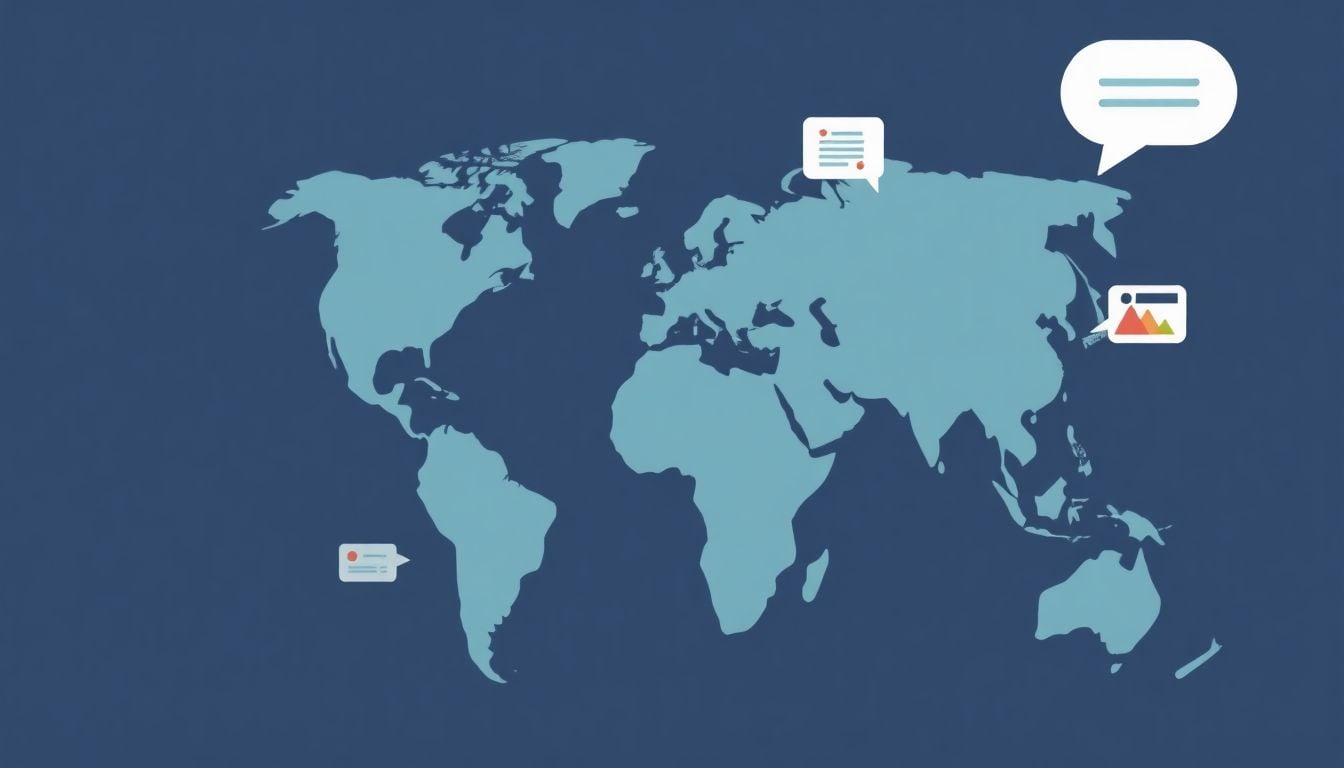
Complete AI Prompt Pack
1000+ prompts • $37
I know how frustrating it can be to create user experiences that don’t quite fit different regions. It’s easy to think one size fits all, but users want content that feels personal and relevant. If you keep reading, I’ll show you how ChatGPT can help craft localized content that speaks directly to diverse audiences. In just a few steps, you’ll learn how to make your digital experiences more welcoming and effective for everyone.
Key Takeaways
- Localized user experiences make content more personal and relevant based on users’ regions and cultures.
- Use ChatGPT to quickly create regional-specific content that resonates with diverse audiences.
- Craft detailed prompts to guide ChatGPT for generating tailored outputs, incorporating local slang and customs.
- Review AI-generated content for cultural appropriateness, ideally with input from native speakers.
- Keep updating content and prompts to stay aligned with changing languages and cultural trends.
- Develop tailored prompts for different regions to ensure content consistency and authenticity.

What Are Localized User Experiences and Why They Matter
Localized user experiences are about tailoring how users interact with your website or app based on their specific regions, languages, and cultural norms. Instead of a one-size-fits-all approach, localization makes content feel relevant and personal to each user.
Imagine visiting an online store that displays prices in your local currency, uses idioms familiar to your country, and mentions holidays you celebrate. That’s what a great localized experience looks like.
Why does this matter? Because users are more likely to engage, trust, and make purchases when they see content that respects their cultural context. It helps build connections and avoid misunderstandings that could turn users away.
Adding regional touches shows you understand your audience, which boosts satisfaction and loyalty. This is especially true for brands expanding to international markets—if people feel seen and understood, they’re more likely to stick around.
Localization isn’t just about translating words. It’s about crafting a user experience that feels natural and welcoming wherever your audience is from. So, neglecting this can mean missed opportunities and lower conversions across different regions.
How ChatGPT Can Help Create Customized Local Content
ChatGPT is a powerful tool for making your content adapt to different regions with ease. It can generate regional-specific messages that sound natural and relevant to diverse audiences.
For example, you can ask ChatGPT to create product descriptions that use local slang or cultural references. This helps your content resonate better with specific groups.
Automation plays a big role here. Instead of manually rewriting content for each area, you can feed ChatGPT prompts that guide it to produce region-tailored outputs quickly.
Thinking about multilingual support? ChatGPT can switch between languages smoothly, making your chatbots or content accessible to users speaking different tongues.
Here are some prompts you can use immediately:
- Generate a product description in British English, including local slang and idioms.
- Write a greeting message for customers in Japan that respects local customs and language nuances.
- Create a promotional message for a holiday campaign in Mexico, incorporating cultural traditions.
- Translate and adapt this section of text into French, considering regional dialects and expressions.
Using prompts like these makes it easy to develop content that feels native and engaging, no matter where your users are from. ChatGPT effectively bridges language and cultural gaps, saving time while personalizing user interactions.
Steps to Design a Localized User Experience with ChatGPT
Creating a regional feel with ChatGPT involves a clear process. First, identify your target markets and understand their specific cultural and linguistic needs.
Next, develop a list of key phrases, slang, and regional references that resonate with each audience. Use these as part of your prompts to guide ChatGPT’s output.
Then, craft detailed prompts to generate content suitable for different areas. For example, instruct ChatGPT to incorporate local idioms or mention regional holidays.
After generating the content, review for cultural appropriateness and accuracy. It’s good practice to involve native speakers or cultural experts in this step.
Finally, test the responses with real users in each region. Gather feedback on how well the content connects, and adjust your prompts or guidelines accordingly.
Remember, localization is an ongoing process. Keep updating your prompts and content to stay aligned with cultural shifts and language trends.

Creating Effective Prompts for Regional Dialects and Language Nuances
When working with ChatGPT to generate content that feels truly local, crafting prompts to capture regional dialects and language quirks is key. Start by specifying the dialect or slang you want in the prompt. For example, ask ChatGPT to “write a casual product description using Australian slang.”
Including details about local expressions helps produce responses that resonate. For instance, instruct ChatGPT: “Generate a customer greeting in New York City style, using common slang and idioms.”
If you want to mimic regional tone and style, be clear. Example prompt: “Create a friendly travel advice message for tourists in Italy, incorporating local Italian phrases and polite expressions.”
Remember, the more specific you are about the dialect or cultural style, the more authentic the output will feel. Use prompts that include these details to make your content sound natural and regional.
Prompt Examples for Regional Content Creation
- Write a promotional email in British English, including common idioms and polite expressions.
- Generate a social media caption for a café in Paris, using French slang and cultural references.
- Create a chatbot greeting for customers in Canada, featuring local expressions and mannerisms.
- Draft a newsletter update for Australian users, using local slang and mentioning regional holidays.
- Generate a customer support response in Mexican Spanish, including polite and culturally relevant phrases.
- Create a product description with Indian English, incorporating local idioms and market-specific terms.
Tips for Managing Multi-Region Content with ChatGPT
When creating content for multiple regions, develop a set of tailored prompts for each area. Save these prompts to keep consistency high and avoid surface-level adaptations.
For example, have a prompt like: “Generate a promotional message for Japan, respecting formal language norms and including regional festivals.”
Keep a style and tone template for each region. This helps ensure that your responses stay true to local language styles, slang, and cultural sensitivities.
Lastly, always review generated content with native speakers if possible, to catch nuances that AI might miss. This small step can prevent awkward phrasing or cultural missteps.
Sample Regional Prompts You Can Copy and Use
- Write a friendly email promotion in Canadian English, including local phrases and references to Canadian holidays.
- Create a Spanish social media post for users in Spain, using regional slang and idioms.
- Generate a customer support message in French for users in Quebec, with appropriate dialect and cultural references.
- Draft a holiday greeting for German customers, using local expressions and customs.
- Write a product recommendation for Australian users, featuring colloquial language and regional slang.
- Prepare a travel guide snippet for Japanese tourists, incorporating local etiquette and idioms.

Ways to Ensure Content Consistency Across Multiple Locations
Keeping your localized content consistent across regions is key to building trust and maintaining a clear brand voice. Start by developing a style guide that covers tone, terminology, and branding guidelines tailored for each target market.
Create a master list of approved terms, phrases, and idioms for each region, and share them with anyone involved in content creation or editing.
Use ChatGPT prompts that specify the style and tone you want for each region to maintain uniformity. For example, instruct ChatGPT: “Write a friendly promotional message in Australian English, using regional slang and a casual tone.”
Implement version control and review processes, ideally involving native speakers or regional experts, to catch any inconsistencies or inaccuracies.
Regularly audit your localized content to ensure it adheres to your style guide and update your prompts as needed based on feedback or cultural shifts.
Automation tools like content management systems or localization platforms can also help enforce standards across multiple regions automatically.
How to Handle Cultural Sensitivities and Avoid Offending Audiences
Addressing cultural sensitivities is crucial when creating localized content with ChatGPT. The first step is to research cultural norms, taboos, and preferred communication styles for each target audience.
When prompting ChatGPT, include clear instructions to avoid sensitive topics or language that might be inappropriate. For example: “Generate a promotional message for Japan that respects local customs and avoids sensitive political references.”
Always involve native speakers or cultural consultants to review AI-generated content before publishing. They can spot nuances or potential pitfalls you might miss.
Use prompts that ask ChatGPT to add culturally respectful greetings or expressions. For example: “Create a greeting message for users in India that is polite and culturally appropriate.”
Be cautious with idioms, humor, and slang—what’s funny or acceptable in one region may be offensive in another. Test and adjust your prompts accordingly.
Remember, when in doubt, opt for neutral language and seek local input to keep your content respectful and welcoming.
Measuring the Effectiveness of Your Localized User Experiences
Finding out if your localized efforts are working involves tracking a few key metrics. Look at user engagement metrics like click-through rates, time spent on page, and bounce rates for each region.
Conversion rates are also telling — see if regional users are completing desired actions, like making a purchase or signing up, at higher rates after localization.
Gather direct feedback through surveys, reviews, or user interviews to get insights into how well your content resonates locally.
Use analytics tools to compare performance data across regions and identify areas for improvement. For example, if a particular regional version isn’t performing well, revisit your prompts and cultural references.
Create a feedback loop by continuously testing variations of your local content, refining your prompts, and updating responses based on user responses.
Remember, improving localized experiences is an ongoing process—stay flexible, and adapt as your audience evolves.
Final Tips for Successful Localization with ChatGPT
Start small—test your prompts in one region before scaling to others to avoid overwhelm and ensure quality.
Keep prompts clear and specific—direct instructions lead to more accurate regional content.
Always involve native speakers or regional experts to review your AI-generated content, especially for important messaging.
Update your prompts regularly to reflect evolving language trends, slang, and cultural norms.
Use a variety of prompts to generate diverse responses, which helps prevent your content from sounding robotic or repetitive.
Leverage tools and resources like translation services, cultural databases, and local influencer insights to enrich your localization efforts.
Finally, remember that good localization isn’t just about translation—it’s about capturing the essence of each region’s voice, making every user feel genuinely understood.
FAQs
Localized user experiences refer to adapting content, design, and interactions to meet the specific cultural and linguistic needs of users in different regions, enhancing engagement and satisfaction.
ChatGPT can generate tailored content that caters to local preferences, idioms, and cultural references, making it easier to create marketing materials and web content specific to various regions.
Best practices include researching local customs and preferences, using appropriate language, and engaging with local communities to ensure that content resonates well with target audiences.
Testing can be done through user feedback, A/B testing different content versions, and gathering analytics to track engagement metrics, which helps identify areas for improvement.
Related Articles

Loyalty Program Tiers: AI Ideas For Enhanced Customer Engagement
I know managing loyalty programs can feel overwhelming, especially when trying to keep customers happy and engaged. The good news is, AI ideas for tier systems can make this process much easier and more fun. If you keep reading, I’ll show you how AI can help design, personalize, and automate loyalty tiers, making your program … Read more

Referral Program Copy AI: Boosting Your Business With AI Solutions
Ever wonder how to get more people to join your referral programs without sounding pushy or salesy? You’re not alone. Many businesses struggle to craft the perfect message that encourages sharing yet feels genuine. Keep reading, and you’ll discover how AI can help you create compelling referral copy effortlessly. In just a few minutes, you’ll … Read more

Growth Loop Ideas With AI: Strategies for Business Success
Hey, I get it—growing a business online can feel like a never-ending challenge, especially when figuring out how to keep users coming back. But here’s the good news: AI has some clever tricks up its sleeve that can create what’s called “growth loops”—little engines that fuel your growth automatically. Stick around, and I’ll show you … Read more

Experiment Log AI Template: Benefits, Features, and Guide
Ever tried keeping track of your experiments but felt overwhelmed by messy notes and incomplete data? I get it—staying organized can be a hassle, especially when juggling multiple projects. But don’t worry—there’s a simple way to make logging experiments easier and more accurate. Keep reading, and I’ll show you how using an AI-powered experiment log … Read more

A/B Test Hypothesis AI Templates: Enhance Your Testing Process
If you’re running A/B tests, you know coming up with good hypotheses can be tricky. Sometimes it feels like guessing, and that can slow things down. But what if there was a way to make your hypotheses smarter and easier to create? Keep reading, and I’ll show you how AI templates can help you craft … Read more

Innovation Backlog AI Template: Boosting Your Innovation Process
Ever felt overwhelmed trying to keep track of all your innovation ideas? It’s easy to get lost in the chaos of managing backlog items, especially when everyone’s busy. Keep reading, and I’ll show you how an AI-powered template can make sorting and organizing those ideas a lot simpler. In just a few steps, you’ll be … Read more

Ideation Sprint Agenda AI: Plan, Execute, and Succeed Efficiently
I know many of us find brainstorming sessions a bit chaotic or just not as productive as we’d like. The good news is, using AI in your ideation sprint can help smooth out those rough edges and spark fresh ideas. Stick with me, and I’ll show you how AI tools can make your next session … Read more

Brainstorming Facilitation AI Prompts: Enhance Your Creativity
If you’ve ever felt stuck trying to run creative brainstorming sessions, you’re not alone. It can sometimes be tough to keep ideas flowing or find fresh angles on a problem. But don’t worry—there’s a way to make your sessions more effective and fun. Keep reading, and I’ll show you how AI prompts can be your … Read more

Design Thinking Workshop With AI: Tips, Tools, And Best Practices
Hey there! If the idea of running a design thinking workshop with AI sounds a bit overwhelming, you’re not alone. It’s common to wonder how AI can fit into such a creative process and whether it’ll help or just complicate things. Stick with me, though, and I’ll show you how AI tools—like ChatGPT—can boost your … Read more
Service Blueprint AI Template: Enhance Business Efficiency Today
Getting your service processes straight can feel like a puzzle, especially when trying to keep everyone on the same page. That’s where a Service Blueprint AI Template comes in handy—think of it as a clear map for your customer experience. Keep reading and you might find an easy way to plan, improve, and customize your … Read more

Customer Journey Map AI Template: Enhance Insights and Experience
Ever felt frustrated trying to map out your customers’ journey without the right tools? You’re not alone. Luckily, there’s now an AI-powered customer journey map template that promises to make this process easier and smarter. Keep reading, and I’ll show you how these templates work, their benefits, and how you can start using them to … Read more

Value Chain Analysis AI Guide: Improve Efficiency and Insights
Ever wonder if there’s a smarter way to analyze your company’s value chain without drowning in boring spreadsheets? You’re not alone—many feel stuck with slow, manual methods that just don’t cut it anymore. Stick with me, and I’ll show you how AI can make this process easier, faster, and way more insightful. Keep reading, and … Read more
Last updated: August 10, 2025